Google Gemini Implementation Timeline: What You Need to Know
Explore the Google Gemini implementation timeline to understand key milestones and plan your integration efficiently.

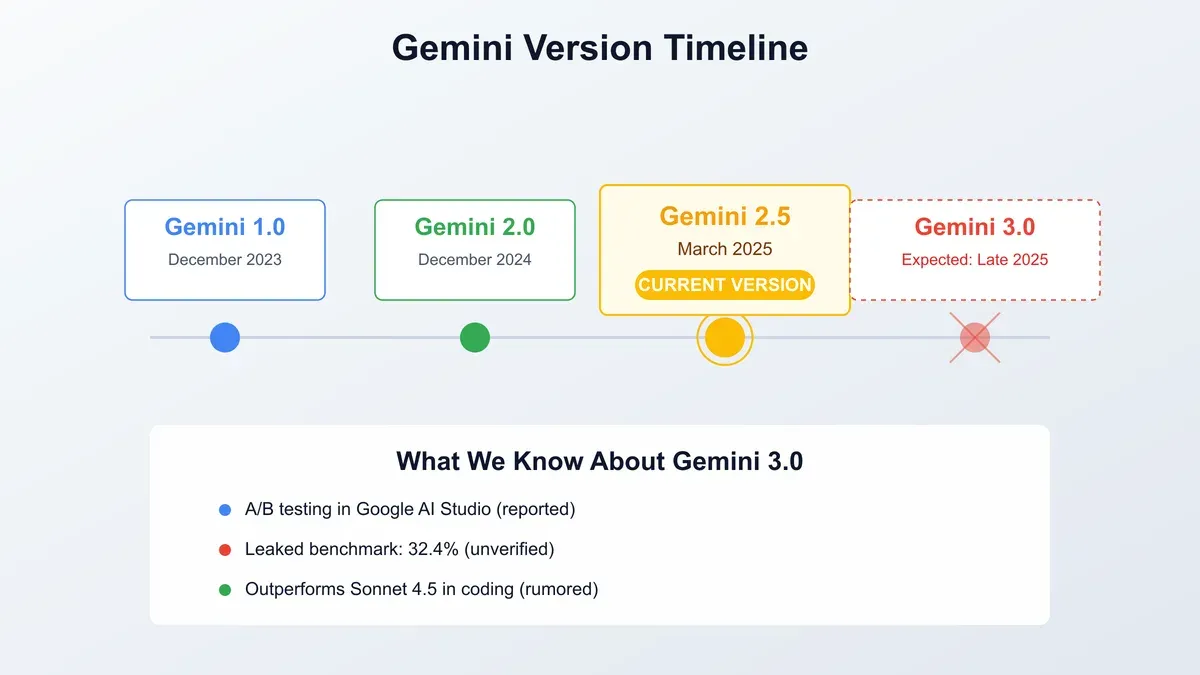
Short answer: The Google Gemini implementation timeline outlines key milestones from its initial creation to public availability, helping you plan integration and adoption efficiently. It covers launch dates, rollout phases, and how to access features step-by-step. Understanding this timeline lets you avoid delays and align your projects with Google's deployment schedule.
This article breaks down the Google Gemini implementation timeline in practical terms. You’ll find clear answers on when Gemini was created and launched, how to start using it, and how to set it up for your needs. It also covers developer resources like API access and documentation, plus common pitfalls to avoid during implementation. The goal is to give you a straightforward path from awareness to active use without hype or guesswork.
When did Gemini launch Google?
Google Gemini was officially announced on July 6, 2023, during Google's annual developer conference. This announcement marked the first public reveal of Gemini's capabilities and vision. However, the announcement was not the same as a full launch; it served to introduce Gemini and outline Google's commitment to advancing AI technology.
The beta release followed several months later, allowing selected developers and partners to access Gemini's features through controlled testing environments. The beta phase helped Google gather crucial feedback and address early issues before making Gemini widely available. The full public launch came after this testing phase, with Google gradually rolling out access to broader user bases across its ecosystem.
Google Gemini is a product of Google's own AI research division, reflecting years of internal development and iteration. Google continues to lead its evolution with regular updates and new integrations. This contrasts with competitors who may license or build on external AI foundations. For example, Google Gemini's public announcement came shortly after a major competitor released a new AI model, highlighting Google's strategic timing to stay competitive.
Understanding these stages—announcement, beta, and full launch—helps you track when Gemini becomes relevant for your projects. The difference impacts when you can start experimenting, when to expect stability, and when to plan full integration.
When was Google Gemini created?
Google Gemini's development began in early 2022, driven by the need to advance beyond existing AI models. Initial research focused on integrating multimodal capabilities, combining text, images, and other data types into a single, cohesive system. Early internal prototypes were tested within Google's AI research division, showing promising results in contextual understanding and reasoning tasks.
By mid-2022, Google published several research papers outlining foundational techniques used in Gemini, such as large-scale transformer architectures optimized for efficiency and adaptability. Insider reports from late 2022 revealed that the team was conducting extensive internal testing to refine these models before any public announcement. This phase was critical to balancing performance with resource requirements, ensuring Gemini could scale effectively.
Gemini fits strategically within Google's broader AI roadmap by addressing limitations found in previous models like PaLM and Bard. It aims to unify multiple AI functionalities under one system, enabling developers and users to deploy more versatile applications. For example, a developer working on a customer support chatbot could leverage Gemini's multimodal input to understand customer images alongside text queries, enhancing response accuracy.
How to start using Google Gemini
To begin using Google Gemini, you need a Google account with appropriate permissions. Access is available via the Google Cloud Console, integrated Google products like Google Workspace, or directly through the Gemini API. If you are a casual user, start by logging into your Google account and navigating to the Gemini interface within your product or through the dedicated web portal. Developers must enable the Gemini API in the Google Cloud Console, set up billing, and generate API keys.
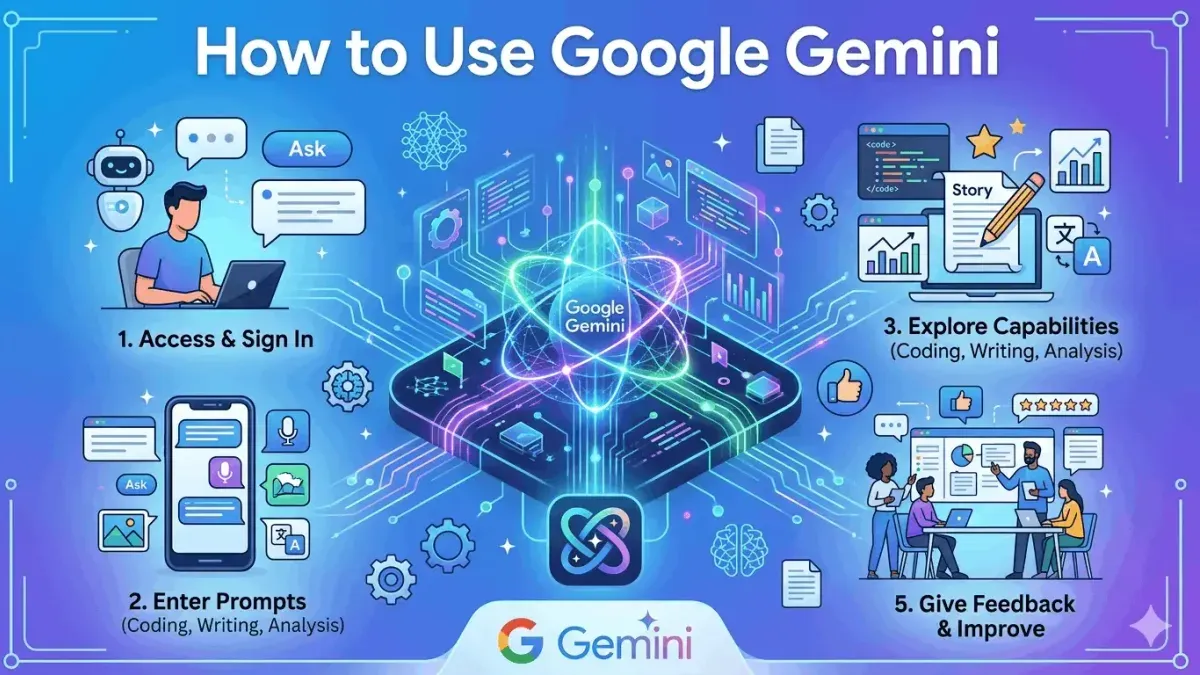
Setup involves granting necessary permissions, such as access to specific datasets or external services depending on your use case. In the Cloud Console, go to "APIs & Services" > "Library", find the Gemini API, and click "Enable". Then, in "Credentials", create an API key or OAuth client ID. Make sure to restrict the key to your application to avoid unauthorized use.
For example, if you want to generate natural language responses in a custom app, after obtaining your API key, configure your HTTP client to include the key in request headers, then send a JSON payload describing your query. A typical first call might be a simple prompt like "Summarize this text" with the text attached. Monitor responses and adjust parameters such as temperature or max tokens to tune output. Casual users won’t need API keys and can interact through built-in UI elements in Google products.
- Sign in with a Google account.
- Enable Gemini API in Google Cloud Console (for developers).
- Create and configure API credentials with proper restrictions.
- Grant necessary permissions for your application or product.
- Make initial queries via UI or API using sample prompts.
How to see Google Gemini history
Your interactions with Google Gemini are logged within the Google Account activity controls. To review your history, go to Google Account > Data & Privacy > My Activity. Here, you can filter activity by product and date. Select the Google Gemini entries to see past queries and responses.
Each interaction entry includes a timestamp and the exact input you provided, which helps track your usage patterns or debug issues with specific prompts. For example, if a complex query yielded an unexpected response, you can revisit that session to refine your input or note any system errors.
Privacy settings allow you to manage or delete this history. Under My Activity > Manage Activity, you can delete individual entries or set automatic deletion schedules, such as every 3 months or 18 months. Remember, clearing history improves privacy but may reduce personalized suggestions or context continuity in your interactions.
Users report that reviewing history aids troubleshooting and workflow optimization by identifying recurring queries or adjusting prompts for better results. The interface clearly displays these options, supported by Google’s Privacy Policy, which details data use and user control.
- Navigate to Google Account > Data & Privacy > My Activity
- Filter activity by Google Gemini
- Review past queries and timestamps
- Use Manage Activity to delete or set auto-delete preferences
- Leverage history to refine prompts and troubleshoot
How to set up Google Gemini
Begin by confirming your environment meets the prerequisites: a stable internet connection, the latest version of your preferred programming language SDK (Python 3.8+ recommended), and access to the Google Cloud Console. For non-developers, ensure you have the latest Google Chrome or Firefox browser installed to access the Gemini web interface smoothly.
Developers must enable the Gemini API via the Google Cloud Console. Navigate to APIs & Services > Library, search for "Google Gemini API," and click Enable. Next, under Credentials, create an OAuth 2.0 Client ID or API key depending on your application's authentication needs.
For integration, install the Gemini client library. With Python, run pip install google-gemini. Then, authenticate your session by loading your credentials JSON file and initializing the client like this:
| Code snippet |
|---|
from google_gemini import GeminiClient |
After setup, configure connection parameters such as API endpoint URLs and timeout settings in your environment variables or config files. For example, set GEMINI_API_ENDPOINT to https://gemini.googleapis.com/v1. This step prevents common connection errors.
- Verify environment requirements: SDK version, internet, browser
- Enable Gemini API in Google Cloud Console
- Create and download credentials (OAuth 2.0 or API key)
- Install Gemini client library (e.g., pip install google-gemini)
- Initialize client with credential file
- Set API endpoint and timeout values in config
How to use Google Gemini
Google Gemini offers multiple interaction modes tailored to different needs. You can engage through conversational chat for dynamic problem solving, use search queries for quick information retrieval, or integrate via API calls for automated workflows. For instance, a marketing analyst might query Gemini in chat mode to generate campaign ideas, then switch to API calls to automate content creation at scale.
Typical use cases include drafting emails, generating code snippets, summarizing documents, and providing customer support responses. Businesses often deploy Gemini to streamline internal knowledge bases or enhance chatbot capabilities. Individuals use it to answer complex questions or draft professional communications efficiently.
Maximize accuracy by framing queries precisely, specifying context and desired output format. For example, instead of asking "Write a report," request "Generate a 300-word summary of Q3 sales with key trends and bullet points." This reduces ambiguity and improves relevance.
Efficiency improves when you combine modes. Start with chat to refine your query, then implement the refined prompt through the API for bulk processing. Regularly review output for alignment with your objectives and adjust prompts accordingly.
- Choose the interaction mode that fits your task: chat, search, or API
- Frame queries with clear, specific instructions
- Use chat to prototype prompts before automating via API
- Regularly evaluate outputs and refine prompts to improve accuracy
Google Gemini for developers: API and documentation overview
The Google Gemini API offers multiple endpoints, including text generation, chat completion, and embedding creation. Each endpoint supports parameters such as model selection, max tokens, temperature, and stop sequences. For example, the /v1/chat/completions endpoint allows you to send conversational prompts and receive dynamic replies, crucial for integrating Gemini into chatbots or virtual assistants.
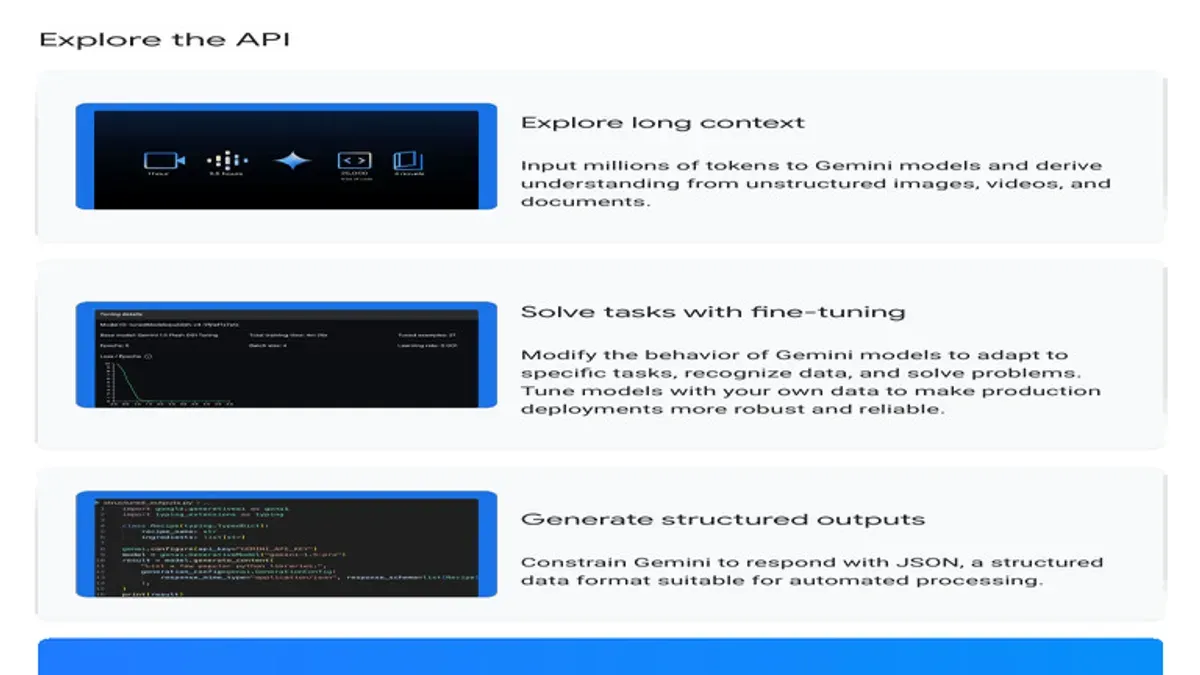
The official Google Cloud documentation provides comprehensive guides, sample requests, and client library downloads available on the Google Cloud Console under APIs & Services > Library > Google Gemini API. It includes detailed code snippets for Python, Node.js, and Java, enabling quick integration into your existing workflows.
Rate limits are tiered based on pricing plans, with free tiers allowing a limited number of requests per minute and paid tiers scaling up accordingly. Pricing is usage-based, typically charging per 1,000 tokens processed. Best practices recommend batching requests when possible and caching frequent responses to optimize costs and latency.
For instance, a typical API call to generate a chat response would specify the model as gemini-1, set max_tokens to 500, and include a system prompt guiding the assistant’s tone. Monitoring your quota and setting exponential backoff for retries can prevent service interruptions.
- Use the Google Cloud Console to manage API keys and monitor usage.
- Refer to the API Reference section in the official docs for endpoint details.
- Implement error handling for rate limit responses (HTTP 429).
- Optimize token usage by refining prompt length and content.
- Leverage client libraries to speed up development and reduce manual payload errors.
Common mistakes to avoid when implementing Google Gemini
Many users delay deployment by misconfiguring API settings, such as neglecting to set the correct OAuth scopes under Google Cloud Console > APIs & Services > Credentials. This can block authentication and cause authorization errors. A concrete example: a developer left out the https://www.googleapis.com/auth/assistant-sdk-prototype scope, which prevented the app from accessing Gemini’s conversational features, delaying integration by weeks.
Another frequent error is overestimating Gemini’s capabilities. Some expect it to replace specialized domain tools entirely. For instance, using Gemini to generate complex legal documents without human review led to inaccuracies and compliance risks. Understanding Gemini’s limits helps set realistic goals and reduces costly rework.
Security and privacy missteps are common too. Failing to encrypt API keys, or sharing them in public repositories, exposes your project to abuse. Official troubleshooting guides emphasize restricting API key usage by IP address or referrer in Google Cloud Console > Credentials > API key restrictions. Ignoring this can result in unexpected charges or data breaches.
- Verify OAuth scopes and permissions precisely.
- Match Gemini’s functions to your actual use case; avoid unrealistic expectations.
- Secure API keys with proper restrictions and avoid public exposure.
- Consult Google’s official troubleshooting documentation early when issues arise.
Frequently asked questions
When was google gemini launched?
Google Gemini was launched in October 2023. The launch introduced Gemini as Google’s latest large language model designed to integrate advanced AI capabilities across its services and developer tools.
When did google gemini come out?
Google Gemini came out in late 2023, with its initial public availability announced in October. This rollout marked the start of broader access to Gemini’s features through Google Cloud and API endpoints.
When did google release gemini?
The official release of Gemini by Google occurred in October 2023. This release included documentation, API access for developers, and integration into select Google products.
When was gemini launched google?
Gemini was launched by Google in October 2023. This launch included a public introduction and the beginning of phased integration into Google’s AI ecosystem.
When did Google Gemini come out?
Google Gemini came out in October 2023, marking the company’s entry into the next generation of AI models. It became available for developers shortly after the announcement via Google Cloud services.
Quick checklist
- Confirm your Google Cloud account has the necessary permissions to enable Gemini services.
- Access the Google Cloud Console and locate the Gemini API under AI & Machine Learning.
- Enable the Gemini API and generate your API key or OAuth credentials.
- Review the official Gemini API documentation for endpoint details and usage limits.
- Test your integration in a development environment before deploying to production.
What this advice does not cover
This article focuses on the official Google Gemini implementation timeline and user setup; it does not cover third-party Gemini-based tools, unofficial forks, or community-driven modifications. If you plan to use Gemini through third-party platforms or require deep customizations beyond the official API, consult those specific providers or documentation. Enterprise deployments with specialized compliance or security needs may require tailored solutions beyond the scope of this guide.
The single most useful next step is to access the Google Cloud Console right now, enable the Gemini API, and familiarize yourself with the authentication process. This will give you direct hands-on experience with the platform and allow you to evaluate how Gemini fits your workflow or product development requirements.
See also: Switching from ChatGPT to Google Gemini: What You Need to Know · ChatGPT Implementation Timeline: How It Evolved and What You Need to Know