Moving from Basecamp to Asana: A Step-by-Step Checklist
Ensure a smooth transition with a clear moving from Basecamp to Asana checklist that protects your data and workflow integrity.

You want a clear, reliable moving from Basecamp to Asana checklist to ensure nothing breaks in the transition.
Missing this can cause data loss or disconnects that disrupt workflows.
Using a professional migration service like Relokia removes the guesswork. It requires no scripting knowledge, connects securely, erases credentials immediately after migration, and offers data filtering to import only what you need. This approach safeguards your data integrity throughout the move.
Every limit and setting name below comes from Projects & tasks migration | Data import and migration for J, as of November 2026.
Prepare your Basecamp data and Asana workspace for migration
Start by reviewing your Basecamp projects, users, and to-dos to determine exactly what you need to migrate. Decide if you want to bring over all data or just selected records; use the data filtering option to import only relevant tasks and projects. This avoids clutter and controls scope.
Next, ensure your Asana workspace or organization has the appropriate structure and capacity to receive new projects and users.
Follow the correct order: first finalize your Basecamp data scope and user mappings, then configure your Asana workspace permissions and structure. Changing this order risks importing incomplete or misassigned data that is difficult to fix later.
For example, if you attempt to migrate before setting up user access in Asana, tasks assigned to Basecamp users may appear unassigned, forcing manual reassignment after migration.
Following this preparation checklist avoids common pitfalls and ensures your migration preserves tasks, users, and their relationships intact as they transfer from Basecamp to Asana.
Learn more about key migration details
Use a professional migration service to transfer data reliably
These relationships define how your project data functions and appear in Asana. Without a specialized tool, you may lose these connections, resulting in incomplete or confusing data.
It securely connects to both platforms and erases your credentials immediately after the migration is complete, ensuring your data’s safety.
For example, if a Basecamp to-do was assigned to a user with specific custom field values, the same assignment and fields appear intact in Asana after migration.
This approach saves you from costly errors and incomplete transfers common in manual efforts.
Using a professional migration service like Relokia ensures your project data moves accurately and securely, preserving all relationships and customizations critical for your team's workflow. Learn more about Relokia.
Move your tasks and sections effectively within Asana after migration
After migrating from Basecamp, your tasks and users arrive in Asana with relationships and custom fields preserved. To organize your projects to fit your workflow, start by moving individual tasks. Open a task, select the project field, and add or change the project assignment to move it to another project. This keeps the task’s data intact while placing it where it belongs.
To move an entire section, hover over the section header, click the dropdown arrow, and choose “Move to another project.” This transfers all tasks within that section, preserving their order and relationships. For example, if you migrated a “Marketing Campaign” section but want it under a different project, this method moves it cleanly without breaking links.
Projects themselves can be moved between teams to align with your organization’s structure. Go to the project header, click on the team name, then select the new team from the dropdown. This ensures your migrated projects fit your Asana hierarchy.
These steps require no scripting or complex setup, letting you refine your workspace post-migration with precision and ease. Learn more.
Create and manage checklists within Asana tasks
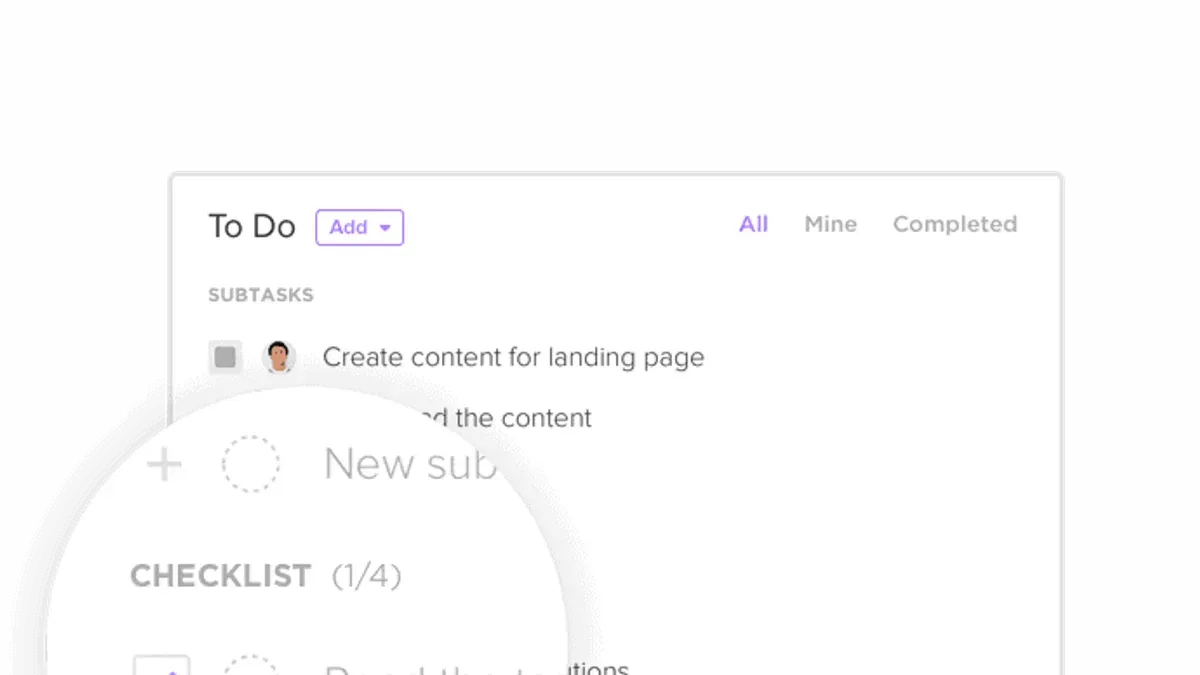
In Asana, checklists are best replicated using subtasks within a parent task, reflecting Basecamp to-dos clearly and structurally. To add a checklist, open the main task, click "Add subtask", and enter each checklist item as a separate subtask. This preserves the relationship between the task and its components, aligning with how Basecamp to-dos migrate as tasks with intact connections.
Organize subtasks logically by grouping related items or steps, and assign them to team members to track progress individually. Use the subtask completion status to monitor overall task progress, as Asana visually displays subtasks completed versus total subtasks.
For example, a project launch task could have subtasks like "Finalize content," "Approve design," and "Schedule release," each acting as checklist items. This method replaces Basecamp’s simpler to-do lists with Asana’s richer task architecture, letting you maintain detail and accountability.
Utilize Asana’s native features such as due dates, assignees, and comments on subtasks to enhance checklist management. This approach leverages the fact that Basecamp to-dos migrate as tasks, ensuring your checklist items remain actionable and connected within Asana’s ecosystem.
Handle completed tasks and navigate task history in Asana
To move a completed task, open it, select the project or section field, and add or change its location; Asana keeps the task marked complete throughout.
To review a task’s history, use the task’s activity feed found under the “Activity” tab. This log records every edit, comment, and status change made post-migration, allowing you to track updates or spot errors. If you need to revert changes, manually restore previous details by referencing this activity, as Asana does not offer automatic version rollback.
For example, if a task’s due date was mistakenly changed during migration, check the activity feed to find the original date and update it back. This audit trail is crucial for verifying data integrity after migration and maintaining trust in your project records.
Since Basecamp to Asana migration preserves users and to-dos as Asana tasks with relationships intact, you can confidently manage completed tasks and rely on task histories to monitor ongoing project accuracy and accountability.Learn more about the migration process.
Common mistakes when migrating from Basecamp to Asana and how to avoid them
For example, tasks may lose their assigned users or linked subtasks, disrupting workflows.
Failing to prepare user mappings causes task assignments to fail. If Basecamp users aren’t properly matched to Asana users beforehand, tasks appear unassigned or assigned incorrectly, leading to confusion. Confirm that every Basecamp user has a corresponding Asana account ready before starting.
Ignoring data filtering needs results in migrating excessive or irrelevant records. This bloats your Asana workspace and complicates project management. Review and filter Basecamp projects, tasks, and to-dos carefully before migration to keep only necessary data.
Skipping post-migration validation means missing data gaps or misconfigurations. For instance, incomplete task histories or missing custom fields can go unnoticed. Check migrated projects thoroughly a day or a week after migration to verify completeness and fix any errors promptly.
| Symptom | Cause | Fix |
|---|---|---|
| Tasks missing assignees or custom fields | Manual migration or no user mapping | Use Relokia service; prepare user mappings before migration |
| Too many irrelevant tasks imported | No data filtering before migration | Filter Basecamp data carefully to migrate only what you need |
| Undetected missing task history or broken links | No post-migration validation | Review migrated data promptly; correct or re-migrate if needed |
These pitfalls undermine data integrity and workflow continuity. Preparing carefully and using a professional migration service prevents these failures and preserves your project structure exactly as needed. Learn more about specialized migration services.
What to do after migrating your projects to Asana
Once your Basecamp data is in Asana, start by verifying that all users and tasks have migrated correctly. Confirm that user accounts match and that tasks retain their original relationships and custom fields. This step ensures nothing critical was lost during transfer.
Check that completed tasks still show as completed and that all checklist items within tasks remain intact. Missing completion statuses or checklist elements can disrupt your workflow and should be addressed immediately.
Adjust your project and team settings within Asana to align with your current processes. Customize notifications, permissions, and project templates to fit your team’s needs and avoid bottlenecks.
This allows you to catch any overlooked issues and gives your team time to adapt. Use this opportunity to provide essential Asana training, helping users navigate their new workspace confidently.
For example, after migration, verify that user mappings correspond exactly to your team roster and that task dependencies are preserved. Then, a few days later, check that integrations and automations trigger as expected.
Read next
- Switching from Asana to Basecamp: Expert Steps and Insights
- Moving from Asana to Trello Checklist: Expert Steps for a Smooth Shift
- Moving from Asana to Slack Checklist: Streamline Your Workflow Shift
- Seamlessly Move Your Tasks from Asana to Notion
Frequently asked questions
How to go back in asana?
Within Asana’s interface, you can also use the project or task breadcrumbs at the top to navigate back to earlier views.
How to move completed tasks in asana?
To move completed tasks, open the task, click the project field at the top right, then add or change the project assignment. This moves the task while preserving its completed status. You can also bulk move completed tasks using advanced search to filter completed tasks, then selecting and updating their projects.
How to go back in Asana to previous task versions?
Asana tracks task changes in the task’s activity log, accessible from the task details pane under "History."
How to move completed tasks in Asana to a different project?
Locate the completed task, open its details, and use the project field dropdown to add the new project. Removing the old project assignment moves the task fully. Remember that even completed tasks can be assigned to multiple projects, so check all project tags to ensure the task appears where you want.
Common mistakes when migrating from Basecamp to Asana and how to avoid them
- Ignoring the preparation order: Starting migration before cleaning up Basecamp data or setting up Asana workspace causes data mismatches. Always complete data cleanup in Basecamp before configuring Asana.
- Choosing an incompatible migration service: Using generic tools that don’t preserve custom fields or data relationships leads to lost or broken project structures. Select a service like Relokia that supports these features and erases credentials after migration.
- Overlooking task-user mapping: Assuming all users will map automatically without verification can cause orphaned tasks. Confirm that Basecamp users correspond correctly to Asana users before migration.
- Failing to handle completed tasks properly: Not reviewing how completed tasks and history transfer can create confusion. Plan how to archive or manage completed tasks within Asana after migration.
- Skipping post-migration checks: Not verifying data integrity or task relationships a day or week later risks unnoticed errors. Schedule follow-ups to confirm everything migrated intact and fix issues promptly.
Pages this guide relies on
- Basecamp to Asana migration - Projects & tasks migration | Data import and migration for Jira, Wrike, MS Project and others — Projects & tasks migration | Data import and migration for J